Say you’re vegan at a dinner table and watch what happens to the room.
Nobody asked you to justify anything. You’ve not said a word about anyone else’s plate. But somebody will start defending theirs anyway, usually with a joke, occasionally with a lecture about lions.
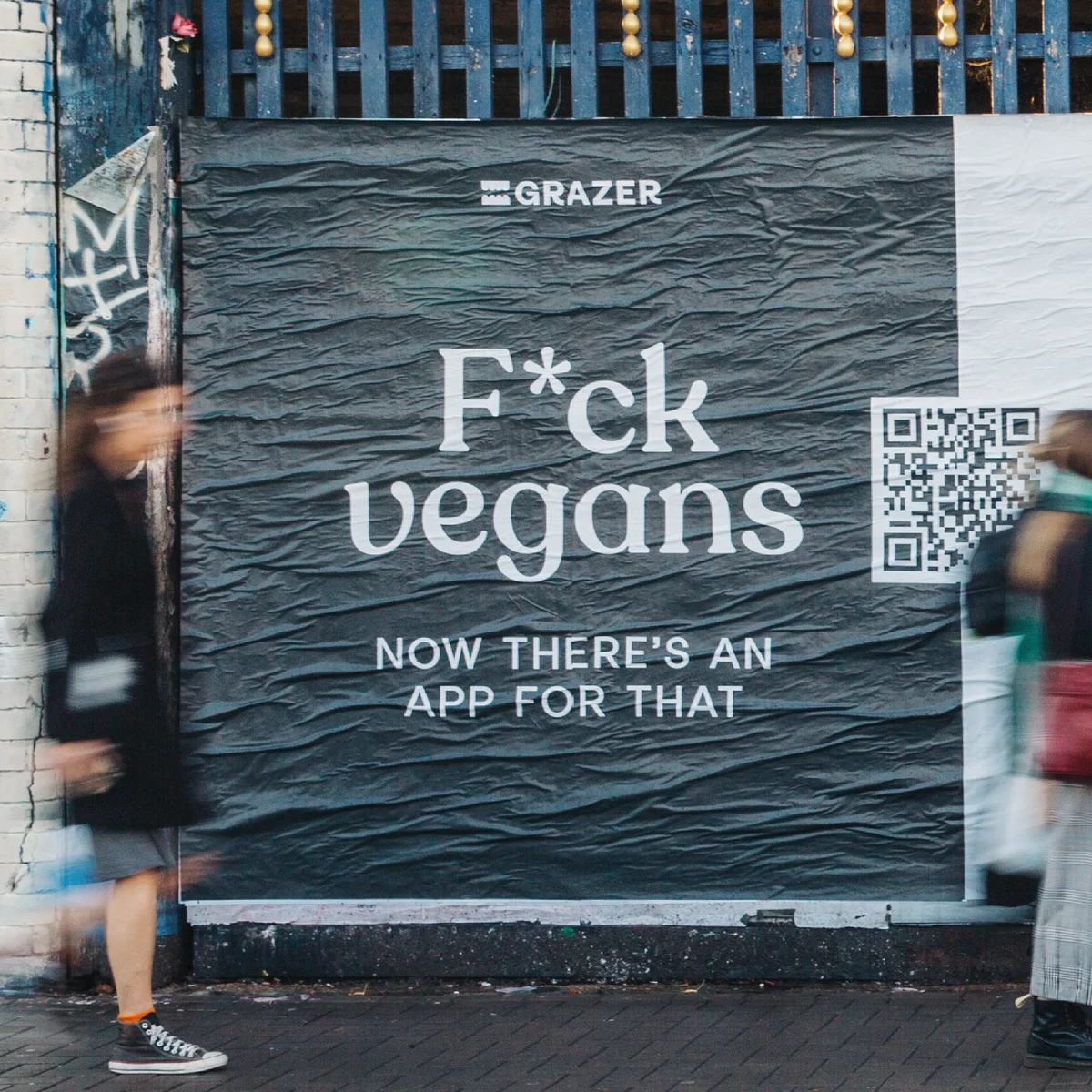
That reaction is the whole reason F*ck Vegans existed.
Nobody is neutral about vegans
Here’s the uncomfortable thing most vegan brands talk around: veganism has an image problem, and it’s not really about food.
When someone says they’re vegan, a lot of non-vegans hear a verdict. Not because one was delivered, but because the mere existence of someone making a different choice can feel like a comment on yours. And once a person feels judged, they don’t go away thinking about their dinner. They go away thinking they don’t much like vegans.
So it compounds. The vegan feels braced for a fight before they’ve opened their mouth. The non-vegan feels got at before anyone has said anything. Neither of them has done anything wrong and both of them leave slightly annoyed.
You can see the result in how people talk. Vegan is one of the last identities it’s still socially fine to be openly rude about, out loud, at work, to someone’s face, as small talk.
You can’t argue with a vibe
The instinct is to correct it. Explain, cite, prove the protein thing wrong for the nine hundredth time.
It doesn’t work. Nobody in history has been debated into liking vegans. Sentiment isn’t an argument you can win, it’s a mood, and moods don’t respond to footnotes.
So we stopped trying to fix it and took it instead.
F*ck Vegans, Love Vegans
If there’s an anti-vegan feeling out there, fine. We’ll write it in enormous letters and put our name under it.
The point was to make something both sides could enjoy for opposite reasons. If you don’t like vegans, F*ck Vegans reads as agreement and it’s funny. If you’re vegan, it reads as an invitation, and it’s funnier. Same two words, two completely different jokes, and everybody is in on one of them.
That’s the flip. Take the sentiment that has been used against this community for decades and make it the thing the community wears. It stops being an attack the moment we’re the ones saying it.
And the second half matters as much as the first. Love Vegans. On Grazer you can do both, and the fact that those two things sit next to each other perfectly comfortably is roughly the entire personality of the app.
Bimini
We pitched it to Bimini, who had come on board as a stakeholder in 2022, and they said yes immediately. They posed with the slogan written on their skin, which is a level of commitment to a pun we still think about.
It ran during Veganuary 2023, the one month a year when everyone is already talking about veganism and most of the conversation is about sausage rolls.
The press picked it up, and a decent number of people were annoyed, which is exactly the correct amount of annoyed for a campaign with that word in it.
Veganuary 2023
- 12 January Bimini of ‘Ru Paul’s Drag Race UK’ Bares It All in “F-CK VEGANS” Campaign(opens in a new tab) Hypebae
- 24 January ‘F*ck Vegans’: Bimini Strips Off For Plant-Based Dating App(opens in a new tab) Plant Based News
Reclaiming works, it’s not just a stunt
This is the same instinct behind Soy Boy being one of our badges. That word was invented in 2017 to humiliate vegan men. It’s now something people put on their profile on purpose. An insult stops working the second the target picks it up and wears it out of the house.
There’s a serious version of the point underneath. Vegan marketing is overwhelmingly earnest, and earnestness confirms the stereotype rather than denting it. Being vegan isn’t a penance. A dating app for vegans should be about desire, not virtue.
It’s still the energy
We haven’t retired it and we’re not going to. Three years on it’s still on our founder’s face on Instagram, and it’s still the first thing people mention when they meet us.
If you’d like the polite version of a vegan dating app, some exist. This isn’t that one.